
Adrian Saurin
Signal Integration in Cancer Biology
@adesaurin.bsky.social
https://www.saurinlab.com
Current Research
Understanding how signalling networks are regulated, how they control the cell cycle, and how this breaks down to drive cancer progression
Studying how we can better understand, predict, and improve anti-cancer drug responses
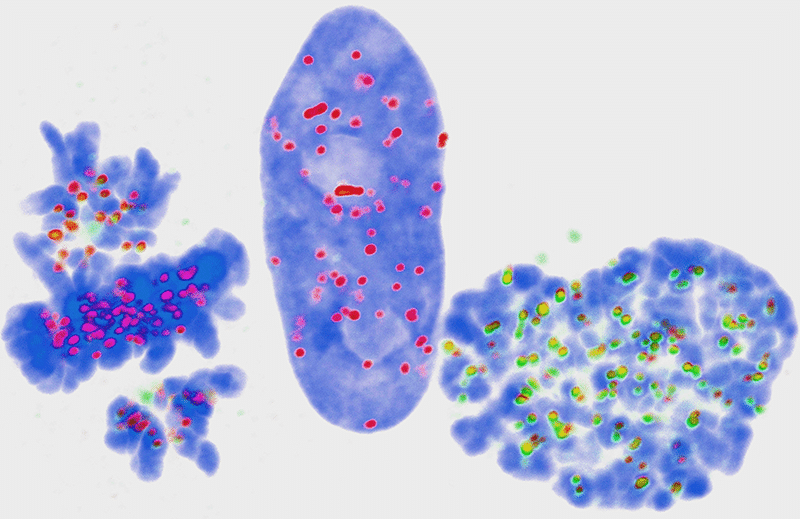
We use the kinetochore as a beautiful system to understand signal integration, because so many different signals converge onto one localised complex to control chromosome segregation. We investigate how multiple kinases and phosphatases work together to ensure this process occurs accurately at each round of cell division, and how loss of such fidelity drives chromosome instability and tumour evolution in human cancer. We take a variety of approaches including biochemistry, cell biology, synthetic biology and mathematical modelling.
We study how cell cycle inhibitors can induce tumour-selective killing. Our recent work revealed how CDK4/6 inhibitors – major new breast cancer drugs –cause cancer cells to permanently stop dividing. When cancer cells are arrested with these drugs, they continue to grow in size, leading to abnormal proteome scaling, stress and senescence. All these events are driven by the oncogenic signals in cancer cells, explaining how these general cell cycle inhibitors can achieve tumour specificity: an age-old question in cancer research.
We also study the mechanisms to explain the clinical efficacy other chemotherapeutic drugs such as Elraglusib (originally developed as an ATP-competitive inhibitor of GSK3, but we found is also potent inhibitor of microtubule polymerisation) and Paclitaxel (we are exploring the hypothesis that clinical efficacy relates to the ability of paclitaxel to become concentrated and “trapped” inside 3D tumour environments).
Key Publications
View all Publications
A chemical-genetic system to rapidly inhibit the PP2A-B56 phosphatase reveals a role at metaphase kinetochores
Allan, L.A., Corno, A., Valverde, J.M., Toth, R., Ly, A., Saurin, A.T.
Nat. Comm.
(2025)
Oncogenic signals prime cancer cells for toxic cell overgrowth during a G1 cell cycle arrest
Foy, R., Crozier, L., Pareri, A.U., Valverde, J.M., Park, B.H., Ly, A., Saurin, A.T.
A bifunctional kinase-phosphatase module balances mitotic checkpoint strength and kinetochore-microtubule attachment stability
Corno, A., Cordeiro, M.H., Allen, L.A., Lim, Q.W., Harrington, E., Smith, R.J., Saurin, A.T.
CDK4/6 inhibitors induce replication stress to cause long-term cell cycle withdrawal
Crozier, L., Foy, R., Mouery, B.L., Whitaker, R.H., Corno, A., Spanos, C., Ly, A., Cook, J.G., Saurin, A.T.
Kinetochore phosphatases suppress autonomous Polo-like kinase 1 activity to control the mitotic checkpoint
Cordeiro, M.H., Smith, R.J., Saurin, A.T.
Cyclin B1 scaffolds MAD1 at the kinetochore corona to activate the mitotic checkpoint
Allen, L.A., Reis, M.C., Ciossani, G., Huis In 't Veld P.J., Wohlgemuth, S., Kops, G.J., Musacchio, A., Saurin, A.T.
Group Leader
Adrian Saurin
Adrian was born in Blackburn in the U.K. and studied at the University of Leeds, before moving to London as a PhD student at King’s College, in the group of Michael Marber. After completing his PhD in cardiomyocyte cell signalling, Adrian moved on to postdoctoral positions in protein phosphorylation signalling (with Peter Parker, CRUK London Research Institute) and chromosome segregation (with Geert Kops, UMC Utrecht). In 2013, Adrian started his group at the University of Dundee, with support from a CRUK Programme Foundation award.
Adrian’s group has made the following contributions to our understanding of cell cycle control and cancer biology:
- Demonstrated that a network of kinases and phosphatases work together to start-up and shut-down the mitotic checkpoint signal quickly.
- Showed that PP1 and PP2A-B56 function differently at kinetochores by coupling in opposite ways to phosphorylation inputs.
- Showed that the main mitotic kinase Cyclin B/CDK1 has a critical kinase-independent scaffolding function.
- Showed that kinetochore phosphatases shut down PLK1 kinase activity to silence the mitotic checkpoint.
- Discovered that CDK4/6 inhibitors cause genotoxic stress by downregulating replisome components during a G1 arrest.
- Identified a bifunctional kinase-phosphatase recruitment module that controls chromosome segregation.
- Found that CDK4/6 inhibition drive toxic cell overgrowth to cause senescence.
- Developed a chemical-genetic system to inhibit PP2A-B56, revealing a role at metaphase kinetochores.
Group Members

Adrian Saurin
Group Leader

Ria Spallek
PostDoc

Aanchal Pareri
PhD Student

Lindsay Allen
PostDoc

Andrea Corno
PostDoc